
Choosing a Hybrid Mail Provider: A Guide for UK Organisations
TL;DR
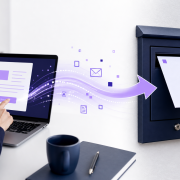
Hybrid mail providers handle the physical production and posting of your business documents, so you do not have to. You create a document digitally, upload or send it to the platform, and the provider prints, envelopes, and dispatches it through the postal network. The right provider for your organisation depends on your volume, your sector, the channels your recipients need, and the level of control and integration your operations team requires. This guide explains what to look for, what questions to ask, and where the real differences between providers tend to show up.
What Does a Hybrid Mail Provider Actually Do?
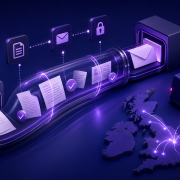
A hybrid mail provider takes documents you have created digitally and manages every step of the physical production and delivery process on your behalf. This typically includes:
- Receiving your documents via an online portal, API, or file transfer
- Printing in black and white or colour, to your specified format
- Inserting documents into envelopes, with your choice of envelope type and window placement
- Applying postage at the class you specify (first class, second class, tracked, or other Royal Mail services)
- Dispatching into the postal network, usually with same-day or next-day processing for jobs submitted before a daily cut-off time
- Providing confirmation and, in some cases, itemised dispatch records for audit purposes
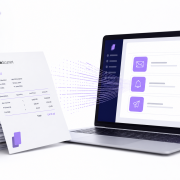
More capable providers go beyond basic print and post. They can handle digital distribution alongside physical mail, so the same job can be routed to email or a customer portal for recipients who have opted in to digital, while paper copies go automatically to those who have not. This multichannel capability is particularly valuable for UK regulated sectors managing a mixed audience of digital and paper-preferring customers.
Prime Document's hybrid mail service includes both physical and digital delivery from a single platform, with configurable options for postage class, colour, double-sided printing, and document validation before dispatch.
Why the Choice of Provider Matters
Hybrid mail looks similar on the surface across providers, but the differences become significant in practice. A provider that lacks sector experience may not understand the regulatory context around your documents. A provider without robust integration options will require manual uploads for every job, creating operational friction. A provider without responsive UK-based support becomes a liability when you need to amend a job urgently or investigate a delivery query.
The cost differences matter too, but they are often smaller than they first appear. A lower headline price that comes with slower turnaround times, no integration, and limited customer service can cost more in staff time and risk exposure than a slightly higher-priced, full-service provider.
Key Criteria for Evaluating Hybrid Mail Providers
1. Physical and Digital Capability
If you only ever need to send letters, a print-only provider may be adequate. However, most UK organisations are managing a gradual transition of customers and members toward digital communications, and a hybrid model that routes each recipient to their preferred channel is increasingly the standard expectation.
Look for a provider that can handle email delivery, portal-based document access, and physical post from a single platform. This avoids the complexity of managing separate suppliers for digital and physical channels and ensures that recipient preferences, including consent records, are maintained centrally.
2. Integration with Your Existing Systems
How documents get from your systems to the provider matters operationally. The simplest approach, uploading files manually through a web portal, works for low volumes but becomes a bottleneck as your usage grows. Better options include:
- API integration that allows your document management system, CRM, or finance platform to send jobs directly
- FTP or SFTP file transfer for automated batch processing
- Print driver installation that lets any user on your network send documents directly from Word, your CRM, or any application that can print
Check whether integration is included in the standard service or priced as an add-on, and what technical resource is required on your side to set it up.
3. Data Security and Compliance Certifications
Hybrid mail processing involves handling personal data, and in regulated sectors, that data may include financial account information, health records, or sensitive personal circumstances. The provider's security posture needs to be adequate for the data you are entrusting to them.
Minimum certifications to look for include:
- ISO 27001 for information security management
- ISO 9001 for quality management
- Cyber Essentials Plus for protection against common cyber threats
- GDPR-compliant data processing agreements and data retention policies
The ICO's guidance on data processors makes clear that you remain responsible for personal data processed on your behalf, so verifying that your hybrid mail provider holds appropriate certifications is a due diligence requirement, not an optional extra. See the ICO's guidance on data protection for the relevant framework.
4. Postage and Production Options
Different document types have different requirements. A standard invoice can go second class. A time-sensitive compliance notice may need first class or even tracked delivery. A member communication for a building society may require a specific envelope size or insert configuration.
Evaluate whether the provider can accommodate:
- Multiple postage classes, including first, second, and tracked
- Mono and colour printing
- Single and double-sided output
- A range of envelope formats
- Enclosures and insert handling
- Personalised stationery or letterheads
The ability to configure these options at a document or job level, rather than having a one-size-fits-all setup, is a meaningful differentiator for organisations with varied mailing needs.
5. Cut-Off Times and Turnaround
For time-sensitive mailings, the daily cut-off time for same-day processing is an important operational consideration. Most providers process jobs submitted before early to mid-afternoon on the same day, dispatching into the postal network that evening. Jobs submitted after the cut-off go the following business day.
Understand the cut-off times, what happens to jobs submitted after hours, and whether there is any capacity for urgent same-day turnaround for exceptional circumstances.
6. Volume and Pricing
Hybrid mail providers typically price on a per-item basis, covering print production and postage. Volume discounts apply at higher usage levels, and annual or committed-volume contracts can reduce the per-item cost further.
When comparing costs, make sure you are comparing like with like. Some providers quote print production separately from postage. Others include everything in a single per-item price. Check whether setup fees, integration fees, or minimum monthly commitments apply.
For a sense of scale, many UK organisations find that outsourcing hybrid mail reduces their per-letter cost to below the price of a standard second-class stamp once production costs are taken into account, compared with the true cost of in-house production that includes staff time, equipment, consumables, and postage at retail rates.
7. Customer Service and Account Management
This is often where providers differ most in practice. Hybrid mail is an operational service, and when something needs to change quickly, including holding a job that has not yet been dispatched, prioritising an urgent mailing, or resolving a billing query, you need a provider with a responsive, knowledgeable team.
Questions worth asking during the evaluation process include:
- Is there a dedicated account manager or a shared service desk?
- What are the support hours and how do you make contact (phone, email, portal)?
- How are urgent requests handled outside normal hours?
- What is the process for amending or cancelling a job before dispatch?
The relationship matters over the long term. A provider that is easy to reach and straightforward to work with reduces the operational burden on your team significantly.
Sector-Specific Considerations
Financial Services
Financial services firms sending regulated documents, including statements, notices of variation, or key information documents, need a provider that understands the FCA's expectations around communication standards and delivery evidence. Audit trail capability, dispatch confirmation, and the ability to demonstrate that documents were sent in a timely and appropriate manner are essential.
Pension Administrators
Pension scheme administrators face specific disclosure deadlines under The Pensions Regulator's guidance. Annual benefit statements, transfer value illustrations, and retirement notifications need to reach members within defined timeframes, with evidence of dispatch available on request. A provider with pension sector experience will understand these requirements without needing them explained.
Local Authorities
Local authorities typically require high-volume, cost-effective mail production, often to populations with significant proportions of older or less digitally engaged residents. Paper mail remains the primary channel for statutory communications, and reliable, correctly addressed dispatch is essential for legal compliance.
For more on how Prime Document supports document distribution across these sectors, explore our full range of solutions.
Questions to Ask Before Committing
Before selecting a hybrid mail provider, the following questions are worth putting to each candidate:
- What certifications do you hold, and are they currently in date?
- How does integration with our systems work, and is there a setup fee?
- What is your daily cut-off time for same-day dispatch?
- Can you handle both digital and physical delivery from a single job submission?
- How do we amend or cancel a job, and up to what point is that possible?
- What does your audit trail and dispatch reporting look like?
- Do you have experience working with organisations in our sector?
- What does your contract structure look like, and is there a minimum commitment?
- How is my data handled, stored, and deleted at the end of the contract?
- Who is my day-to-day contact, and how do we reach them?
Making the Transition
Switching to a hybrid mail provider, or switching between providers, is usually more straightforward than organisations expect. Most providers offer an onboarding period with dedicated support to configure templates, set up integrations, and train users on the platform. The key requirements on your side are typically:
- A review of your existing document formats to confirm they are compatible with the provider's system
- Agreement on a set of test jobs before go-live
- Internal communication to the teams who will use the system
- Confirmation of data processing agreements before any personal data is transferred
Prime Document's hybrid mail team provides full onboarding support and a dedicated account contact throughout the implementation process and beyond.
Summary
Choosing a hybrid mail provider involves more than comparing per-item prices. The right provider for your organisation will have the sector experience to understand your regulatory context, the integration capability to fit into your existing workflows, the security certifications to handle your data appropriately, and the customer service quality to be a reliable operational partner over the long term.
Multichannel capability, covering physical and digital delivery from a single platform, is increasingly important for organisations managing mixed audiences. A provider that can grow with your requirements, handling higher volumes, additional document types, and evolving digital delivery needs, will deliver more value than one that is limited to basic print and post.
Sources:
Information Commissioner's Office: Guide to Data Protection (ico.org.uk)
Royal Mail: Hybrid Mail guide for UK businesses (royalmail.com)
IBISWorld: Document Management Services in the UK Industry Analysis, 2025 (ibisworld.com)