
Hybrid Mail Solutions UK: How Managed Print and Digital Delivery Works
TL;DR
A hybrid mail solution is a managed service that handles the production and delivery of physical and digital correspondence on behalf of your organisation. It combines a secure online submission platform with high-volume print facilities and postal or digital delivery infrastructure. For UK organisations in regulated sectors, a fully integrated hybrid mail solution reduces per-unit mailing costs, removes the dependency on in-house print equipment, and provides the audit trail and data security that compliance requires.
What Is a Hybrid Mail Solution?
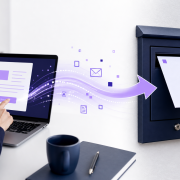
Hybrid mail is the practice of sending physical mail digitally: your organisation creates a document, submits it via a secure online portal, and the provider handles printing, enclosing, and dispatching. A hybrid mail solution takes this further by combining all the components needed to make that process reliable, compliant, and scalable for an organisation of any size.
The term “hybrid mail solution” is often used interchangeably with “hybrid mail service,” but the distinction matters. A solution implies a configured combination of technology, process, and service. It is tailored to your document types, volumes, compliance requirements, and preferred delivery channels. It goes beyond a subscription to a basic mailing platform.
For UK organisations that handle regulated documents, from financial statements and pension communications to council tax notices and insurance correspondence, the reliability of the solution and the security of the underlying platform are not optional extras. They are the baseline.
You can learn more about the fundamentals on our hybrid mail service page.
The Components of a Hybrid Mail Solution
Secure Document Submission
The starting point for any hybrid mail solution is a secure channel for submitting documents and recipient data. This is typically a web-based portal or an API integration with your existing document management or finance system. Data in transit should be encrypted via HTTPS as a minimum, and access should be controlled at user level to prevent unauthorised submissions.
High-Volume Print Production
Once a document is submitted, the provider’s production facility handles print. For organisations sending hundreds or thousands of items per week, this is where the cost efficiencies become most visible. Because providers consolidate print volumes across multiple clients, they access Royal Mail volume discounts and run high-speed, high-resolution digital print equipment that would be uneconomical for a single organisation to operate independently.
Flexible Delivery Options
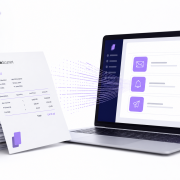
A well-designed hybrid mail solution supports both physical and digital delivery within the same workflow. The same document file can route to print and post for one recipient and email delivery or secure portal access for another, based on stated preference or channel availability. This multichannel flexibility is particularly important for organisations that are transitioning their customer base towards digital, but still need to serve customers who prefer or require physical correspondence.
Audit Trails and Reporting
For regulated organisations, the ability to demonstrate that a document was produced, dispatched, and received on a specific date is not a “nice to have.” It is a compliance requirement. A capable hybrid mail solution generates a full production record for every item, with dispatch confirmation and, where applicable, proof of delivery.
Business Continuity
Organisations that rely on daily document dispatch need confidence that the service will operate regardless of internal disruptions. Providers with ISO-accredited business continuity plans offer a meaningful resilience advantage over in-house operations, where a printer failure or staff absence can delay critical correspondence.
Who Uses Hybrid Mail Solutions in the UK?
Hybrid mail solutions are used across a wide range of UK sectors, though demand is particularly concentrated in organisations that have a regular, high-volume correspondence obligation.
Financial Services and Pension Administrators
Financial services firms and pension administrators produce significant volumes of regulated correspondence: annual statements, policy documents, regulatory notices, benefit illustrations, and member communications. The combination of high volume, strict data handling requirements, and regulatory deadlines makes hybrid mail a natural fit.
Local Authorities
Councils and local government bodies use hybrid mail for council tax bills, planning notices, benefits correspondence, and general public communications. Many are already procuring hybrid mail services through frameworks such as G-Cloud, which reduces the procurement burden for public sector buyers.
Healthcare Insurers and Private Health Providers
Private health insurers and healthcare management companies use hybrid mail for policy correspondence, claims notifications, and member communications. The need for GDPR-compliant data handling and a full audit trail makes a managed solution preferable to in-house print operations for organisations in this sector.
Debt Charities and Financial Mutuals
Organisations working with financially vulnerable customers have a particular obligation to communicate clearly, consistently, and on time. Hybrid mail enables these organisations to maintain high-quality, reliable correspondence at scale without the overhead of an in-house mailing operation.
What the Royal Mail Reforms Mean for In-House Mailing
In 2025, Ofcom approved Royal Mail’s application to reduce second class mail delivery from six days per week to three, removing Saturday deliveries for standard correspondence from 28 July 2025. This change has a direct impact on any organisation that relies on the predictable timing of postal correspondence.
For in-house mailing operations, the reduction in delivery frequency means less certainty over when a document will actually arrive. For regulated organisations that need to meet notice periods, produce evidence of timely dispatch, or comply with sector-specific communication standards, this adds risk to any manual, in-house process.
Working with a hybrid mail provider gives organisations access to volume postage arrangements, which may include first class or priority options at consolidated rates, and maintains the audit trail that regulators expect.
Choosing a Hybrid Mail Solution: What to Look For
Not all hybrid mail services operate at the same level. When evaluating solutions, there are several factors that UK organisations should prioritise.
Data Security Accreditations
Look for providers with relevant ISO certifications, including ISO 27001 for information security management. Given that hybrid mail involves transmitting sensitive personal and financial data, the security posture of the provider is a fundamental consideration.
Multichannel Capability
A hybrid mail solution that handles only physical print and post will become a constraint as your organisation moves toward digital delivery. The most capable solutions handle both channels within the same workflow, giving you flexibility to migrate recipients to digital delivery at their own pace without changing your internal processes.
Production Capacity and Resilience
Ask about daily production volumes, print technology, and what happens when primary systems are offline. A provider with redundant production facilities and an ISO-accredited business continuity plan is a significantly lower operational risk than one without.
Integration Options
The most efficient hybrid mail solutions integrate with your existing document management, ERP, or finance systems via API or secure file transfer. Manual uploads are workable for low volumes, but for organisations sending hundreds of items per day, integration reduces effort and the risk of data entry error.
For a full breakdown of what to assess before committing to a provider, our guide to choosing a hybrid mail provider covers the key criteria in detail.
The Cost Case for a Hybrid Mail Solution
The cost of in-house document production is frequently underestimated. Most organisations account for paper and toner, but the full cost picture includes print equipment depreciation and maintenance, staff time for printing, folding, enclosing and franking, postage without volume discounts, storage and archiving of paper records, and the overhead of handling failed deliveries and reprints.
Outsourcing to a managed hybrid mail solution removes most of these costs. Providers typically charge per item dispatched, with pricing that reflects the volume discounts they obtain through consolidation. Organisations that make the switch frequently report cost savings of up to 60% per item compared to in-house production, alongside a measurable reduction in staff time spent on mailing admin.
For a detailed look at the financial and operational benefits, the benefits of hybrid mail guide sets out the full business case.
How Prime Document Approaches Hybrid Mail Solutions
Prime Document designs hybrid mail solutions around the specific requirements of each client organisation. That means configuring user access levels, validation workflows, document templates, and delivery channels before go-live, rather than providing a generic platform and leaving the setup to the customer.
For organisations in financial services, pensions, local authorities, or healthcare, Prime Document brings sector-specific experience to each implementation. That includes familiarity with the regulatory requirements that apply to document production and delivery in each vertical.
Prime Document’s hybrid mail platform operates over a secure HTTPS connection, generates a full audit trail for every item dispatched, and includes business continuity planning to ISO accreditation standard. The service supports print and post delivery, digital delivery by email, and customer portal access within a single workflow, so your organisation can serve the full range of recipient preferences without maintaining multiple systems.
Summary
A hybrid mail solution is more than a mailing platform. It is a managed service that takes responsibility for the production, delivery, and audit of your organisation’s outbound correspondence. For UK organisations with high-volume, regulated, or time-sensitive mailing requirements, a properly configured hybrid mail solution reduces cost, removes operational risk, and provides the compliance evidence that regulators require.
The combination of rising postage costs, the 2025 Royal Mail service reform, and growing regulatory expectations around document management makes this an area where a well-chosen solution delivers measurable, ongoing value.
If you would like to discuss what a hybrid mail solution would look like for your organisation, contact the Prime Document team.