
Hybrid Mail Platform: A Guide for UK Organisations
TL;DR
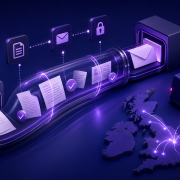
A hybrid mail platform is the software layer that sits between your organisation and its outbound document communications. It receives documents from your teams or systems, manages delivery channel selection, routes items for print-and-post or digital delivery, and provides reporting and audit capability. Choosing the right platform, with the right integration options and access controls, is one of the most consequential technology decisions for operations-heavy UK organisations managing regular outbound communications.
What Is a Hybrid Mail Platform?
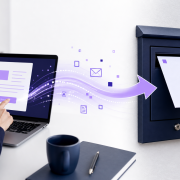
A hybrid mail platform is the web-based or API-accessible software used to submit, manage, and track outbound documents through a hybrid mail service. Think of it as the control layer between your organisation's document workflows and the physical or digital delivery network.
When a finance manager uploads a batch of invoices, or an HR administrator submits payslips for distribution, they are interacting with a hybrid mail platform. It handles the routing logic, the print specification, the delivery channel selection, and the tracking of every item sent.
The quality and capability of the platform is what differentiates hybrid mail providers. Two providers may use the same underlying print-and-post infrastructure but offer entirely different user experiences, integration capabilities, and governance controls.
Core Components of a Hybrid Mail Platform
Document Submission Interface
The submission interface is where users upload documents for despatch. A well-designed platform supports multiple file formats (PDF being the standard), allows users to select delivery options at the point of submission, and provides a clear review step before documents enter the queue.
For lower-volume users or those with infrequent sending needs, a straightforward web interface is usually sufficient. For high-volume or time-sensitive operations, the submission process needs to be fast, reliable, and preferably integrated directly with upstream systems.
Delivery Channel Management
A hybrid mail platform should support both physical and digital delivery channels from a single submission. This means a user can upload a batch of documents, and the platform routes each item to print-and-post or digital delivery based on recipient preferences, address data, or rules configured by the organisation.
This multichannel capability is one of the most valuable aspects of a modern hybrid mail platform. It allows organisations to manage the transition from paper to digital communications at the recipient level, without running separate processes.
Configuration Controls
Different documents require different specifications. The platform should allow configuration of:
- Paper size and weight
- Single or double-sided printing
- Colour or monochrome output
- Envelope type and window position
- Postage class (first class, second class, recorded)
- Enclosures and inserts
These configurations can be set at user level, document type level, or per submission. The ability to save configuration templates for common document types saves time for frequent users.
User Access Controls
For organisations with multiple departments or locations using the same hybrid mail platform, granular user access controls are essential. The platform should support:
- Role-based access (e.g., submitter, approver, administrator)
- Departmental segmentation, so each team sees only its own submissions
- Spend limits or volume caps at user or department level
- Configurable approval workflows for regulated or high-value communications
This governance layer is particularly important for regulated-sector organisations where controls around outbound communications are subject to audit.
Validation and Approval Workflows
Before a document is dispatched, some organisations need a human review step. A hybrid mail platform that supports validation workflows allows an approver to review submitted documents, request amendments, or authorise release for despatch. This is directly relevant to compliance functions and to organisations sending legally sensitive or regulated communications.
Audit Trail and Reporting
Every item processed through the platform should generate a timestamped audit record: who submitted it, when it was submitted, what was selected, and when it was dispatched. This audit trail is essential for regulated-sector users and simplifies responses to customer or regulatory queries about whether a communication was sent.
Reporting dashboards that show submission volumes, spend by department, and delivery channel splits are also useful for finance teams managing costs and IT teams tracking system usage.
Integration: The Differentiating Factor
For many organisations, the most important feature of a hybrid mail platform is how well it integrates with existing systems.
API Integration
A hybrid mail platform with a well-documented API allows organisations to trigger document despatch directly from their CRM, ERP, document management system, or bespoke internal application. This is particularly valuable for:
- Finance systems generating invoices and statements at scale
- CRM platforms triggering customer correspondence based on events
- Case management systems generating regulatory or legal notices
- HR platforms producing payslips or contractual documents
API integration eliminates the manual upload step entirely. Documents are generated by an upstream system, passed to the hybrid mail platform via the API, and despatched without human intervention. This is the model used by organisations with high volumes of transactional communications.
Web-to-Print Workflow
For users who create documents manually rather than through a connected system, a web-based submission interface is the practical alternative. Many platforms also offer document templates within the platform itself, allowing users to populate variable fields (name, address, reference number) and generate a compliant, branded document for despatch, without needing access to a separate design tool.
Pre-built Connectors
Some hybrid mail platforms offer pre-built connectors for common business systems. These reduce the integration effort significantly for organisations using standard platforms.
What to Look for When Evaluating a Hybrid Mail Platform
Ease of Use
The platform should be intuitive enough for non-technical users across finance, HR, customer services, and operations. If the interface requires significant training or specialist knowledge, adoption will be limited.
Security Standards
Documents processed through a hybrid mail platform often contain personal data, financial information, or confidential business content. The platform should operate under ISO 27001-certified data security standards, use encrypted data transfer (HTTPS), and have a clearly documented data retention and deletion policy.
UK GDPR compliance is a baseline requirement. Organisations in regulated sectors should ask specifically about how the provider handles data subject access requests, breach notification obligations, and data processing agreements.
Uptime and Reliability
If your organisation relies on the platform for daily outbound communications, any downtime has direct operational consequences. Ask providers about their uptime SLAs, their incident response process, and their track record.
Support Model
A managed hybrid mail platform should come with responsive, UK-based support. For organisations that depend on the service for time-sensitive communications, the quality of the support model matters as much as the platform features.
Scalability
Your current volumes may be modest, but a good hybrid mail platform should scale with your organisation without requiring a re-platforming exercise. Look for providers with a clear pricing model that works at both low and high volumes.
Hybrid Mail Platform vs. Generic Mailing Software
It is worth distinguishing a hybrid mail platform from general-purpose mailing or document management software. Generic tools may handle document creation or storage, but they do not provide the physical fulfilment capability that is central to a hybrid mail service.
A hybrid mail platform is specifically designed to connect document workflows to physical and digital delivery infrastructure. This is a specialist capability, and the quality of that delivery infrastructure, including print quality, postal relationships, and physical handling standards, is as important as the software layer.
How Prime Document's Platform Works
Prime Document's hybrid mail platform is a secure, web-based system that gives UK organisations full control over their outbound document communications. It supports print-and-post and digital delivery from a single submission, with configurable options for postage, print specification, and delivery channel at every level.
The platform includes user access controls, approval workflows, and a full audit trail for every item despatched. For organisations with system-generated communications, API integration is available to connect upstream applications directly to the despatch workflow.
If you are evaluating hybrid mail platforms and want to understand how Prime Document's approach compares to your current process, our guide to choosing a hybrid mail provider sets out the key criteria in detail.
For organisations looking beyond print-and-post to digital document delivery, our guide to the benefits of hybrid mail for UK businesses explains the full value case.
Summary
A hybrid mail platform is the technology layer that makes a hybrid mail service practical for day-to-day use. Its core functions are document submission, delivery channel management, user access controls, approval workflows, and audit reporting. For organisations with complex or high-volume communications, API integration is the feature that unlocks the greatest operational value.
When evaluating platforms, focus on ease of use, security standards, integration capability, and the quality of the support model. The platform should serve your current needs and scale as your organisation's communication requirements grow.
Sources:
- UK Government Digital Marketplace, Xerox Hybrid Mail Service Specification, applytosupply.digitalmarketplace.service.gov.uk
- CDP, How Hybrid Mail Saves You Time, Money, and Resources, cdp.co.uk
- Pitney Bowes, A Comprehensive Guide to Hybrid Mail Solutions, pitneybowes.com/uk